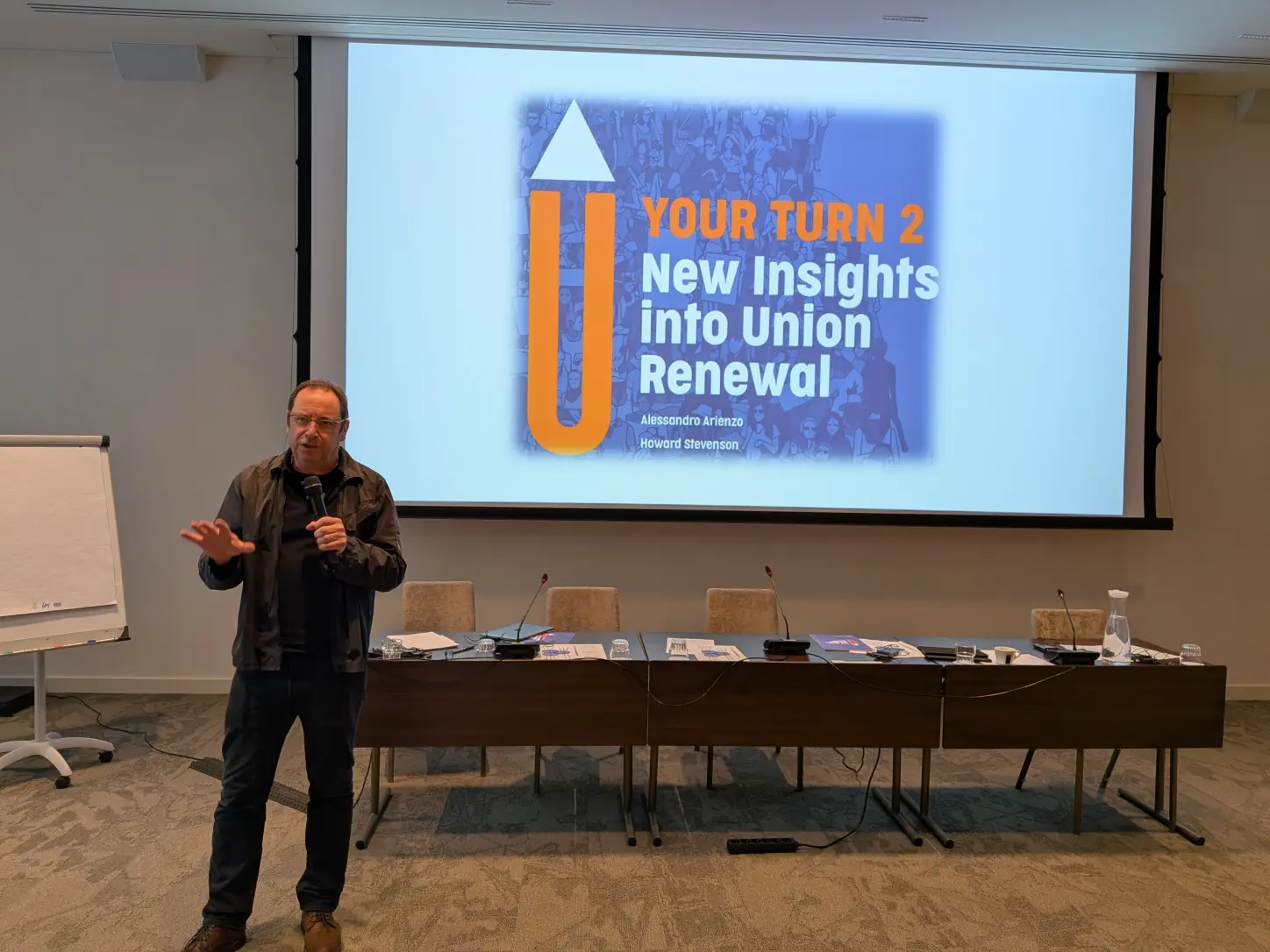
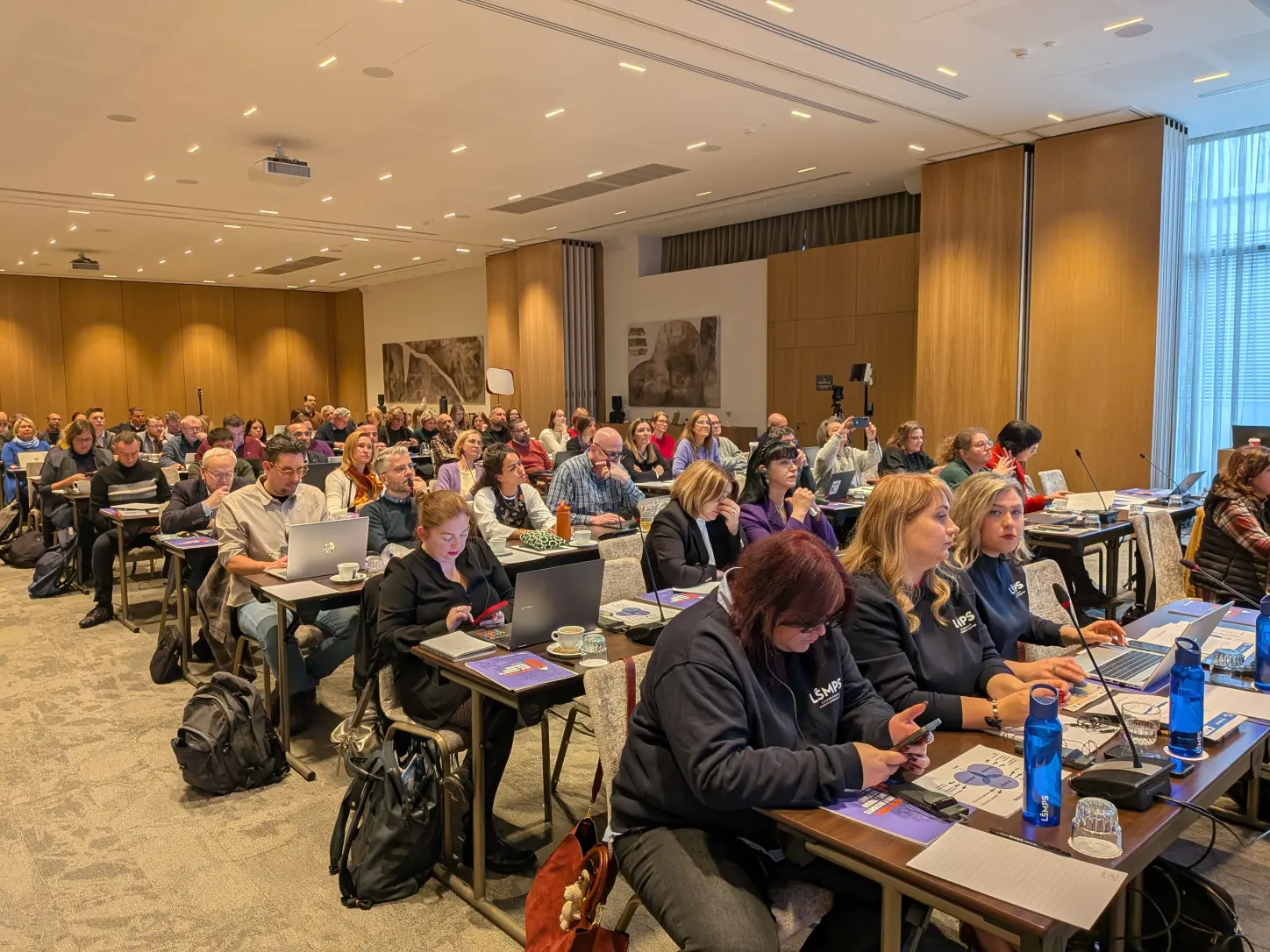
The Final Conference of the ETUCE project “Your Turn 2: Teachers for Trade Union Renewal” took place in Vilnius on 18-19 February 2026, bringing together education trade unionists from across Europe to reflect on two years of collective learning. The project, which previously held workshops in Barcelona and Utrecht, has focused on renewing unions from the ground up by strengthening link leadership: the informal, everyday leadership exercised by workers in their workplaces who act as the essential connection between members and the wider union. The conference aimed both to consolidate the project’s achievements and to identify pathways to embed link leadership more deeply within union structures.
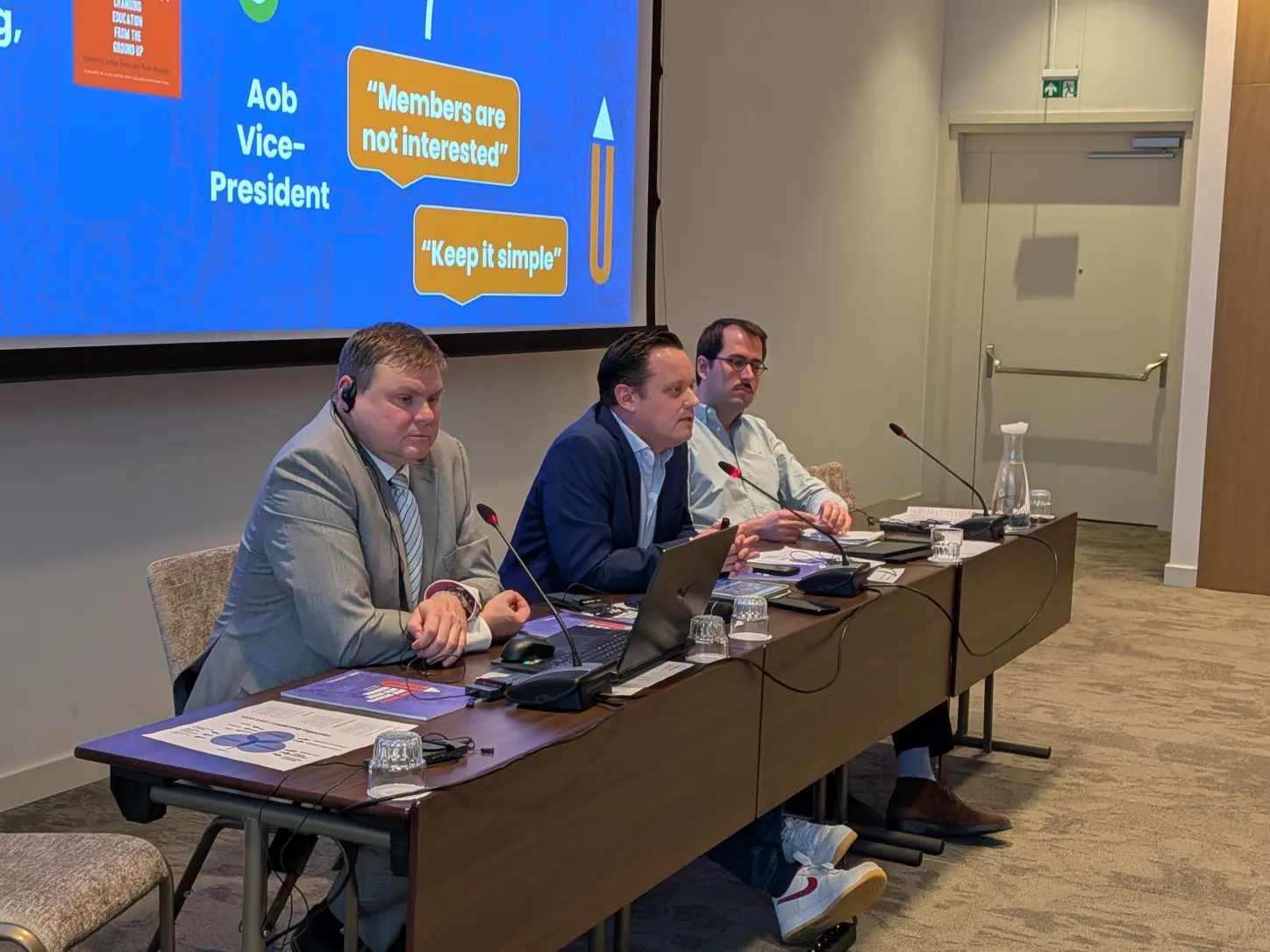
The opening session featured remarks from Egidijus Milešinas (LŠMPS) and Jelmer Evers (ETUCE). Then, project experts Howard Stevenson and Alessandro Arienzo introduced the “Your Turn framework”, as outlined in the research report, and representatives from FECCOO, AOb, LŠMPS and PSZ shared personal insights into how the framework had helped them identify potential link leaders, support new activists, and encourage deeper member engagement. This allowed the experts to outline the theoretical foundations of organising and explain how the concept of link leadership fits within wider strategies for renewal.
Successful link leadership begins with clarity: link leaders must understand their role, what is expected of them, and what they can realistically accomplish. Unions should begin by offering small, manageable tasks and gradually building the confidence of link leaders through a scaffolded approach to responsibility. It is essential to allow link leaders to grow without pressuring them into formal roles they might not be ready for, noting that the value of link leadership lies precisely in its informality and proximity to the workplace.
What is most needed are therefore practical strategies for building strong link leadership within unions. Link leaders thrive when they feel supported, connected, and trusted. This requires an environment where relationships are prioritised, with in-person contact serving as the backbone of union work. At the same time, modern communication technologies offer valuable tools for fast, informal coordination, although digital tools must supplement and not replace face‑to‑face engagement. Several unions shared examples of pairing link leaders to prevent isolation and support mutual learning. Others discussed approaches to developing horizontal networks across schools or regions, ensuring that leadership becomes shared and collective rather than individualised.
Discussions focused on the importance of creating supportive structures without stifling initiative, trusting link leaders to take ownership of their work, and recognising that genuine organising emerges organically when unions loosen overly centralised control and allow energy to flow from the grassroots. Long‑term strategies for organisational change are key if unions want to bring about a change. On this matter, the experience of AOb was presented as a good example of how unions could move beyond short-term campaigns to create sustainable cultures of participation.
Union renewal requires patience, commitment, and a willingness to continuously invest in the development of activists, because only changes in thinking lead to changes in action, and link leaders, when equipped with clarity, education, and support, can contribute to collective transformation in incremental but meaningful ways.
The ultimate objective of the Your Turn 2 project was to invite ETUCE members to question their approach to organising and possibly rethink it, so to identify concrete steps they would take upon returning to their unions. A shift in perspective takes time and effort, moving from viewing leadership as formal positions to recognising the crucial role of everyday, relational leadership at the workplace. A strategic renewal is often inevitable as trade unions are increasingly confronted with a rapidly changing labour market and new pressions exerted on the education sector across Europe, be it because of financial constraints, shortages of teachers, or interferences on the pedagogical mission of education.
Developing link leadership requires not only technical training but also broader union education that supports a deeper understanding of union history, political context, rights, and collective action. Hence, the importance of peer-led learning, where activists train and mentor other activists, strengthening a culture of shared responsibility. ETUCE remains committed to supporting its member organisations in this endeavour and to sustain momentum beyond this conference with new and more bespoke training opportunities.
Strengthening union presence in schools: lessons from the Netherlands