
ETUCE Committee discusses EU Teachers Agenda, digital deregulation and Council of Europe cooperation
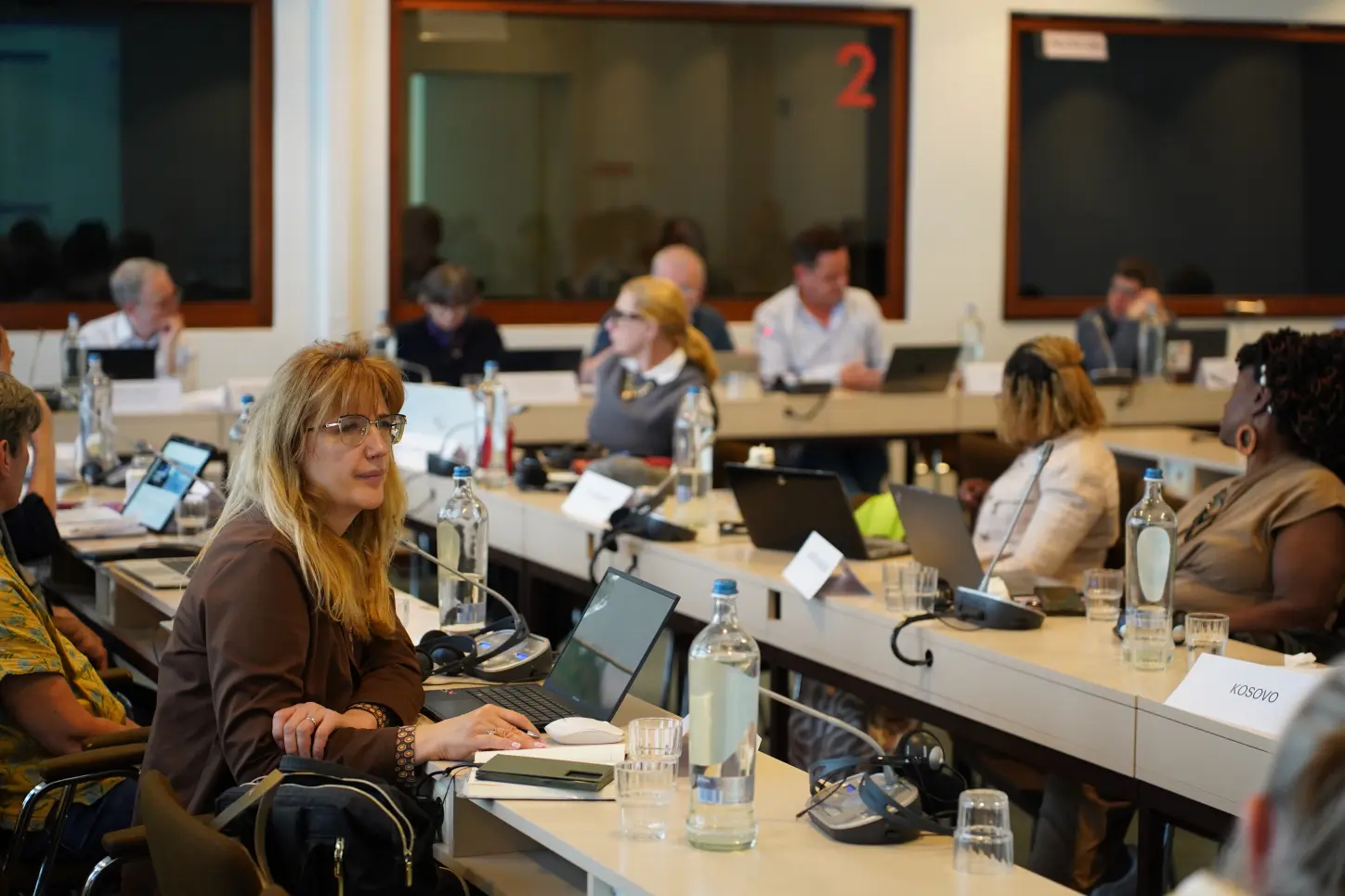
Meeting in Brussels on 28–29 April, the ETUCE Committee discussed key political priorities shaping the future of education in Europe, with a particular focus on EU education policy, digital regulation and cooperation with the Council of Europe.
EU Teachers Agenda: from consultation to co‑design
A highlight of the meeting was an open exchange with Alina Ujupan, Head of Cabinet of Executive Vice‑President Roxana Mînzatu, on the development of a forthcoming EU Teachers Agenda. ETUCE emphasised that teachers and their unions must be involved not only as consultative stakeholders, but as co‑designers of education policy, in line with international commitments such as the UNESCO Santiago Consensus.
Acknowledging the limits of current policymaking approaches, Alina Ujupan recognised that education reform cannot be designed at a distance from schools, classrooms and the teaching profession, stating that “we do not have the assumption that we would know from our offices what the change in the classrooms would look like.” The exchange underlined the need for more structured and permanent dialogue with representative teacher organisations at EU level and in member states.

Jelmer Evers, ETUCE European Director:
“Education and the teaching profession need to be European strategic priorities for member states and European institutions. They are the foundation of an independent, democratic, social and innovative Europe. It is crucial that every student in Europe receives the best education we can offer. Teachers should be at the heart of these policies. And if the EU Teachers Agenda is to succeed, it must be built with teachers, not just about them. Trust, professional autonomy and genuine social dialogue and co-implementation are not optional – they are the foundation of an attractive profession and quality education systems. We see this meeting as a very welcome step to start building this European education future together.”
Digital Omnibus and AI: defending rights and democracy in education
The Committee also discussed the Digital Omnibus package and related AI initiatives, warning that fast‑tracked deregulation risks weakening data protection, professional autonomy and democratic safeguards in education. ETUCE underlined that digital and AI policies must protect the teacher‑student relationship and be guided by fundamental rights, rather than competitiveness narratives or the interests of large technology companies.
Council of Europe: education rooted in human rights
Finally, the Committee welcomed ongoing Council of Europe education initiatives and close cooperation with ETUCE, including work on the future of the teaching profession, academic freedom, citizenship education, AI in education and the upcoming Standing Conference of Ministers of Education: Empowering Educators for a Democratic Europe in the Digital Age, in Podgorica, 3-4 December. Participants stressed that the Council of Europe’s human‑rights‑based approach is essential for public education, students rights, and the rights of teachers and academics and an important counterweight to deregulatory trends.
Across all discussions, a clear message emerged: education policies must be made with teachers, not about them, if Europe is to strengthen democracy, quality public education and trust in its education systems.