ETUCE Calls for an Ambitious EU Teachers Agenda in Meeting with Executive Vice-President Mînzatu
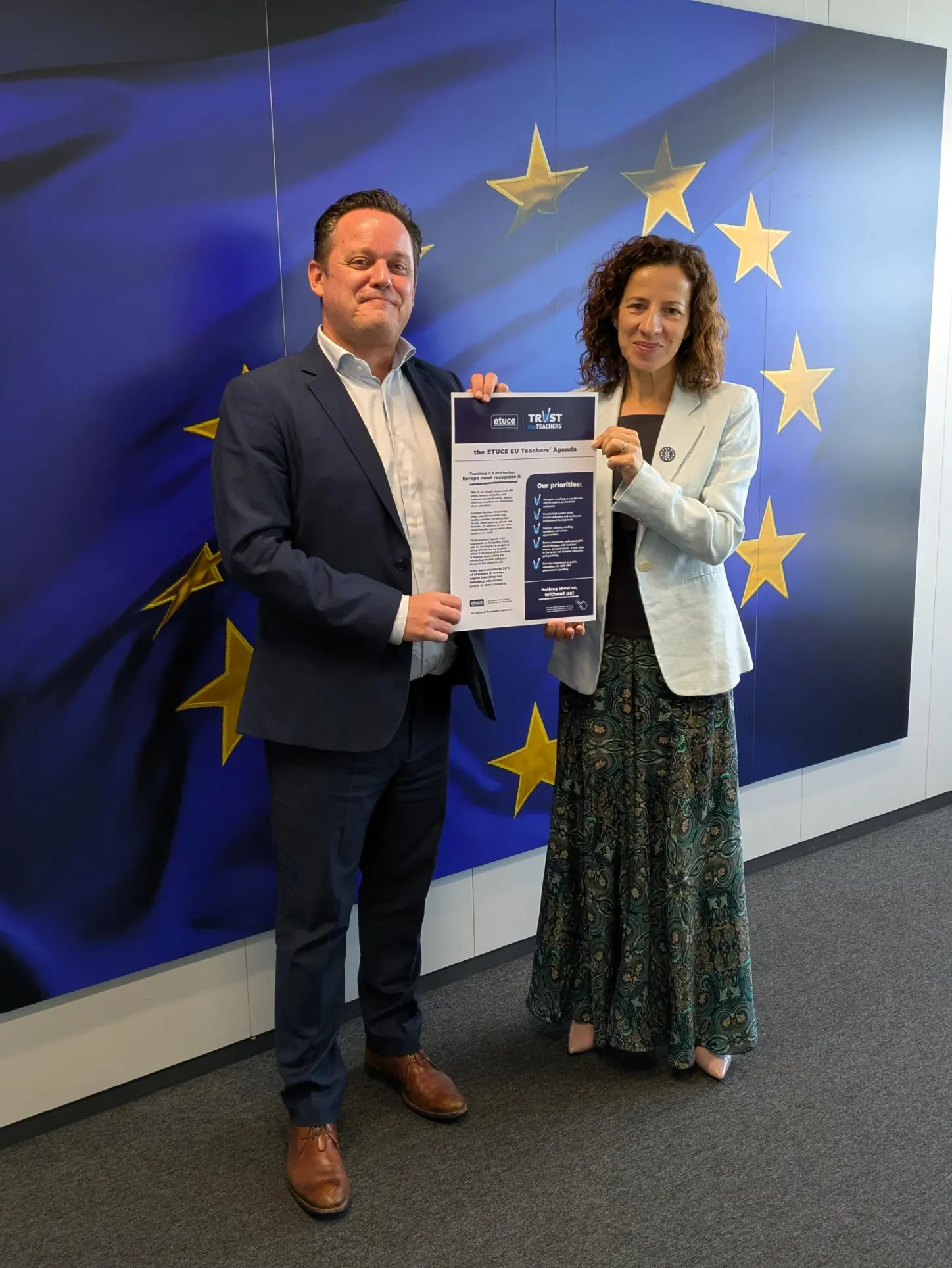
ETUCE director Jelmer Evers met with European Commission Executive Vice-President Roxana Mînzatu today to discuss the upcoming EU Teachers Agenda and the measures needed to address teacher shortages across Europe. During the meeting, ETUCE highlighted the importance of placing teachers and their representative organisations at the centre of education policymaking and implementation.
"It was a very good and open meeting. Education and teachers are a top priority for the Executive Vice-President. Europe is at a defining moment, and education and teachers should be a strategic priority. With the upcoming EU Teachers Agenda, we have a real opportunity to ensure that all students have access to quality education across Europe in the coming decade. Europe cannot tackle the teacher shortage while teachers remain absent from the decision-making table. If the EU Teachers Agenda is to be more than a political slogan, it must strengthen social dialogue, trust the professional expertise of teachers, and invest in the people who make our education systems work. Public education is not a cost. It is one of Europe's most important democratic investments." Jelmer Evers, ETUCE European Director
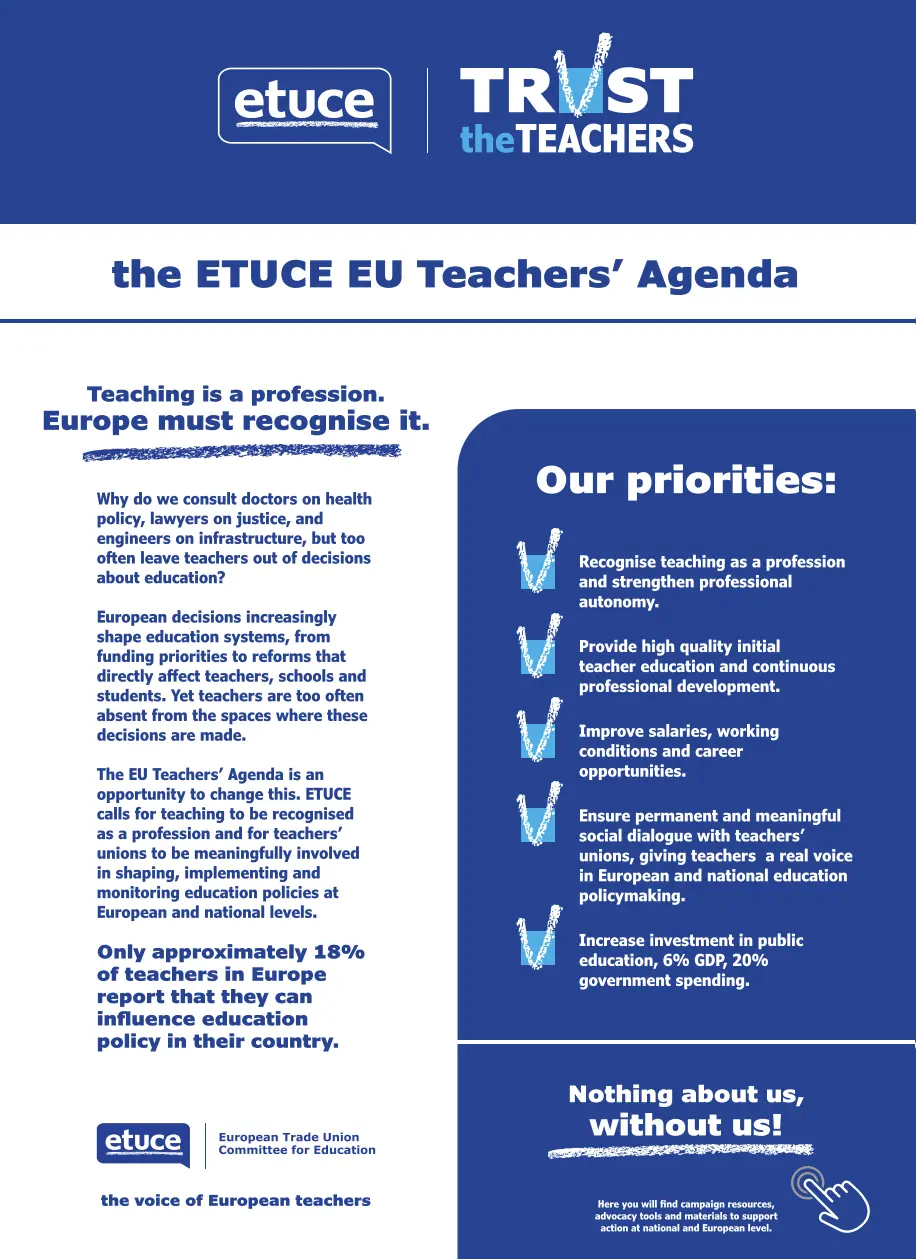
ETUCE presented its EU Teachers Agenda to Executive Vice-President Mînzatu:
- Recognise teaching as a profession and strengthen professional autonomy.
- Provide high quality initial teacher education and continuous professional development.
- Improve salaries, working conditions and career opportunities.
- Ensure permanent and meaningful social dialogue with teachers and unions, giving teachers a real voice in European and national education policymaking.
- Increase investment in public education to 6% of GDP and 20% of public expenditure.
The discussion focused on the need for a more structured and permanent social dialogue with teacher unions at the European and national levels, greater involvement of teacher organisations in EU-funded programmes and initiatives, and dedicated support for the long-term development of the profession.
ETUCE presented a range of proposals aimed at strengthening the profession, including strengthening educational quality and professional standards through cooperation with the profession, support for teachers’ professional autonomy, action to improve working conditions, and stronger cooperation on the responsible use of artificial intelligence in education. ETUCE also underlined the importance of promoting democratic school cultures and countering disinformation through education.
The meeting formed part of ETUCE’s ongoing advocacy for a comprehensive European approach to making teaching a more attractive profession and ensuring quality education for all learners. ETUCE reaffirmed its willingness to work closely with European institutions and member states to turn political commitments into concrete improvements for teachers and education systems across Europe.