Standing Committee for Equality 2026: Changing the narrative, building the future
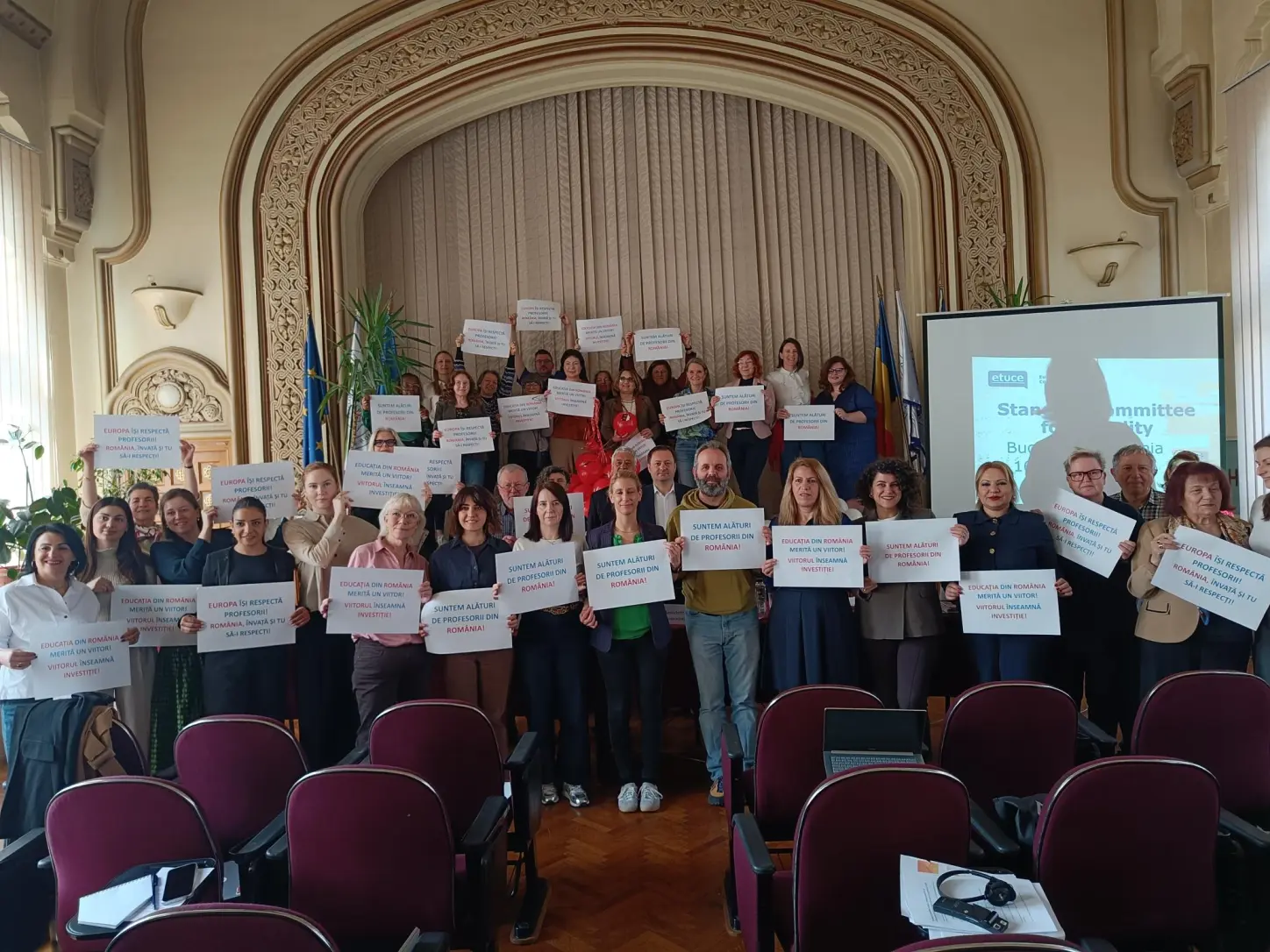
The annual meeting of the ETUCE Standing Committee for Equality took place on 16–17 March 2026 in Bucharest, hosted by FSLI, ETUCE member organisation in Romania, to review progress on equality and inclusion and to plan actions for the year ahead.
Standing Committee’s members discussed the current developments in EU equality and inclusion policies, and reflected on the national implementation of the policy recommendations for education trade unions on inclusion of migrants and refugees in education and teaching profession (ETUCE project ETU4REF). They also reviewed the draft joint ETUCE–EFEE guidelines on inclusion of persons with special needs which were prepared in the framework of the joint ETUCE-EFEE project InclEdu4AllNeeds, emphasising the importance of strengthening the inclusion in the mainstream education and improving conditions in regular schools.
A key discussion took place around ETUCE’s strategic priorities on democracy, artificial intelligence, and inclusive public education, with two overarching themes being selected for the next two meeting of the Standing Committee: rethinking the curriculum to ensure the inclusion of persons with various backgrounds (e.g. gender, sexual orientation, nationality etc.) and discussing how dis-informed narratives fuel the rise of inequalities, racism and misogyny. Members discussed rising ideological pressures on education, online hate affecting teachers, and the need for stronger support for democratic citizenship education. Building on the strategic discussions, Standing Committee members engaged in the brainstorming activity designing various joint actions on equity and inclusion in 2026, and shared the relevant activities of their unions through a poster session.
Finally, a presentation from the Time for Inclusive Education (TIE), a Scottish education charity who deliver professional learning and resources for teachers on LGBTI inclusive education and online hate and disinformation (that are co-designed with EIS, ETUCE’s member organisation in Scotland) prompted reflections on addressing online prejudice and supporting educators in sensitive contexts. TIE offers adapting the online courses to other national contexts and contributing to shared policy development and knowledge exchange across European education systems. The session on the impact of the AI on equity and inclusion in education and teaching profession highlighted concerns about algorithmic bias, data protection, procurement, and stressed the need for co‑design of AI tools with education personnel and trade unions.